Facebook Organic Reach in 2026: Why Your Page Barely Gets Seen — and the Posting Strategy That Still Works
Remember when you could post on your Facebook Page and your followers would actually see it? For Page owners who have been around a while, the change feels personal: the same content, the same audience, and yet the numbers keep shrinking. If your posts are reaching a tiny sliver of your followers, you are not doing anything wrong. You are experiencing what every industry benchmark has been documenting for years.
Industry trackers estimate that average Facebook Page organic reach now sits at roughly 1–2% of followers per post. Socialinsider’s 2026 benchmark puts the figure at about 1.25%, while a large 2025 dataset measured 1.65% — with standard post reach down 41% year over year even as Reels reach climbed. Some practitioners report seeing up to 5% on a good day, but the well-documented center of gravity is low single digits. Translation: a Page with 10,000 followers can expect a typical post to be seen by roughly 125 to 200 of them.
That number is the starting point — not the obituary — for any facebook organic reach strategy 2026. This guide breaks down why reach collapsed, what Meta’s own guidance says still works, and the practical posting system — Reels, volume, consistency, automation, and a small ad budget — that lets a one-person team compete anyway. No hacks. No engagement pods. Just the playbook.
Why Facebook Organic Reach Collapsed: The Structural Truth
First, the uncomfortable part: organic reach did not decline because of one algorithm tweak you can reverse-engineer. It declined because three structural forces all point the same way — and understanding them is what separates a facebook organic reach strategy 2026 built on evidence from one built on wishful thinking.
- Attention is finite; content is infinite. Billions of posts compete for every feed slot. The algorithm’s job is to filter ruthlessly, and branded Page content is the first thing filtered. Your post is not competing with the Page down the street; it is competing with everything your followers’ friends, Groups, and favorite creators published that day.
- Scarcity is the business model. Meta is an advertising company. The harder organic reach gets, the more valuable paid reach becomes — and multiple analysts have noted that Page reach and ad revenue moved in opposite directions for years. This is not a conspiracy theory; it is simply how the incentives line up.
- The format shifted under your feet. The feed that once rewarded link and text posts now prioritizes short-form video. One 2025 industry dataset found standard post reach down 41% year over year while Reels reach rose — the same study measured overall average reach at 1.65% of Page followers. If you are still posting the way you posted in 2019, the algorithm has moved on without you.
What the trackers actually measured
The numbers vary by study, industry, and Page size — which is exactly why you should benchmark your own monthly average rather than chase a single published figure. But the direction is unambiguous. A roundup of industry analyses through 2025 and into 2026 places average Page reach somewhere between 1.6% and 5.9% of followers per post, against a historical backdrop of roughly 16% in 2012 and 6% in 2014. Social Insider’s large 2025 dataset landed at 1.65%, and Socialinsider’s 2026 benchmark at approximately 1.25%. A separate 2026 benchmark study put average Facebook engagement at just 0.15% — a reminder that reach and engagement are different metrics, and both are under pressure. For a broader look at the data behind these figures, see this 2026 organic reach benchmark roundup that compiles the Socialinsider findings.
The takeaway is not despair. It is clarity: you are competing in a low-reach environment, so your strategy must be built for it — more touchpoints, better formats, and a system that makes both sustainable. That is what the rest of this guide is about.
What Meta Itself Says Still Works: Reels, Groups, and Consistency
Meta rarely admits reach is down, but its published guidance for Pages tells its own story. The advice in the Facebook Business Help Center for Page owners keeps returning to the same three themes: publish short-form video (Reels), post consistently, and create content that sparks genuine conversation in the comments. The platform rewards what it documents — so start by doing what Meta itself says it wants to see.
Reels are the distribution engine. Unlike standard Page posts, Reels are eligible for recommendation surfaces that show your content to non-followers. That is the structural reason Reels reach rose while standard post reach fell 41% year over year in the 2025 dataset. A Reel is the only organic format on Facebook that can still find you a new audience instead of merely reminding your existing one. If you post one thing today, make it a Reel.
Groups are the engagement engine. Facebook Groups consistently show higher per-member engagement than Pages, because members opted in and the algorithm treats group activity as a strong interest signal. A Page plus an active community Group is a far stronger combination than a Page alone: the Page broadcasts, the Group bonds, and the algorithm notices both.
Consistency is the trust engine. Pages that post daily train two audiences at once: the algorithm, which learns you are a reliable content source worth testing in more feeds, and your followers, who learn that your Page is alive and worth checking. Dead Pages do not just get low reach — they get forgotten. Reels, Groups, and consistency: that trio is the non-negotiable core of any facebook organic reach strategy 2026. We break down real examples of this dynamic on the @alcashzone YouTube channel, where we show exactly how consistently-posting Pages behave differently in the feed.
The Volume Game: Why Posting 3–4x Daily Is the New Normal
Here is the math nobody wants to do. If each post reaches roughly 1.5% of your followers, a single daily post gives you about 30 reach events a month. Four posts a day gives you 120. Your per-post percentage does not change — but your total monthly reach, your number of chances at a breakout post, and your odds of catching followers at the right moment all multiply.
That is why any serious facebook organic reach strategy 2026 treats volume as a first-class citizen. The Pages still growing organically are not posting masterpieces once a week. They are posting good-enough content relentlessly — and the algorithm’s preference for Reels means a phone-shot vertical video counts as much as a produced one.
One honest caveat: volume without quality control backfires. Hides, unfollows, and “show me less” taps are negative signals the algorithm remembers. The volume game only works with a repeatable format mix you can sustain without annoying your audience. Here is a daily cadence that balances both:
- Morning — one Reel. Educational or entertaining, shot on your phone, under 60 seconds. This is your reach play: the format most likely to escape your follower base.
- Midday — one conversation post. A question, a poll, a hot take, a customer story. This is your engagement play: comments are the strongest signal you can earn.
- Afternoon — one value post. A tip, a behind-the-scenes photo, a link to something genuinely useful. This is your trust play: the reason people stay followed.
- Evening — one story or Group post. Ephemeral content or community discussion. This is your loyalty play: low effort, high warmth.
Fitting volume into your facebook organic reach strategy 2026
Four posts a day sounds like a full-time job — because done manually, it is. Nobody sustains that by opening the Facebook app four times a day, every day, forever. The Pages that pull it off share one trait: they separate creating from publishing. Creation happens in weekly batches; publishing happens automatically. Once you internalize that split, the volume game stops being exhausting and starts being a system. Which brings us to the part of the system most Page owners skip.
How Automation Makes High-Frequency Posting Humanly Possible
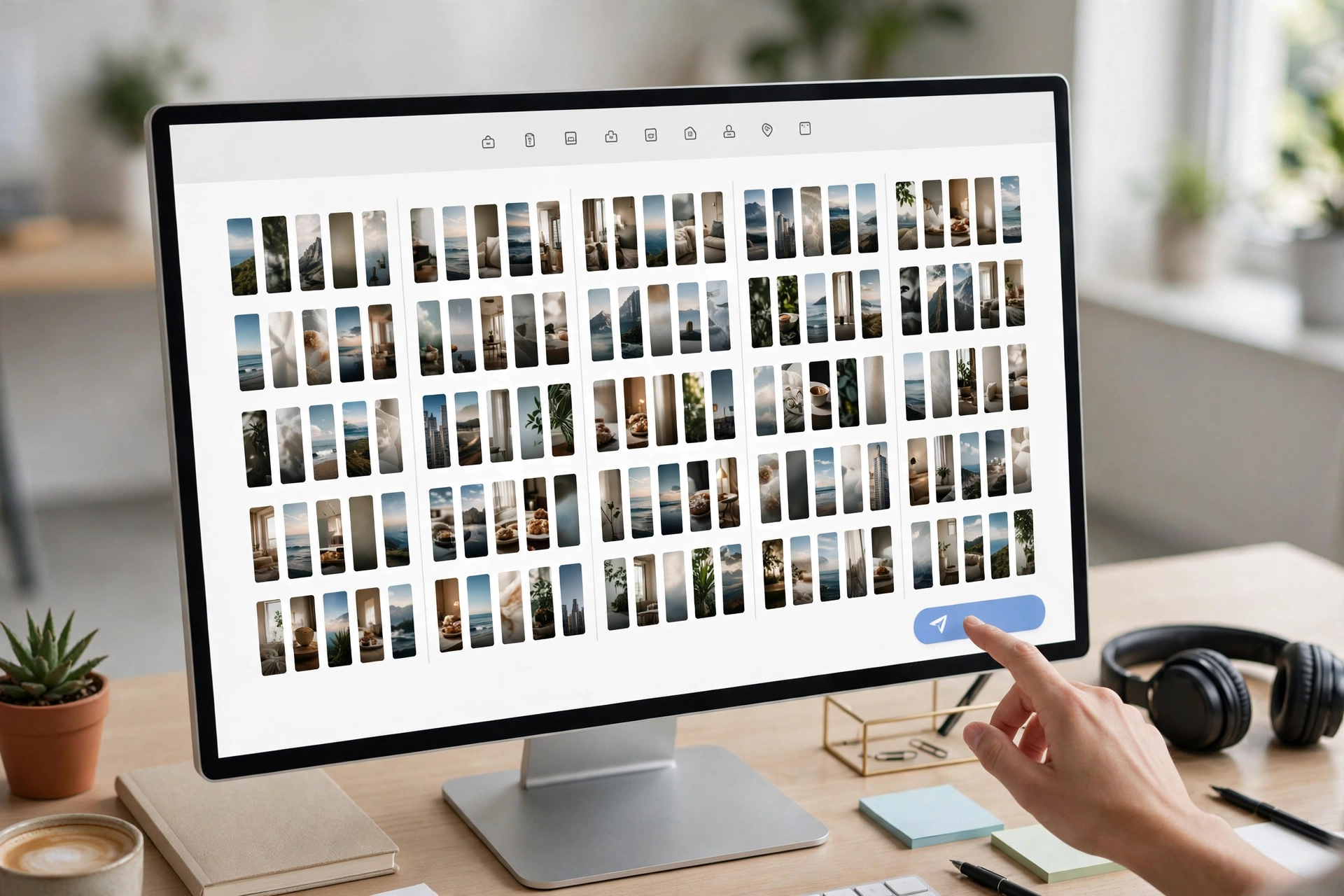
Consistency is a scheduling problem, not a motivation problem. The fix is a weekly batching workflow: one content session per week where you write the posts, cut the Reels, and queue everything — then the software handles the daily grind. This is the exact workflow we detailed in our guide on how to automate Facebook posts: define your content pillars, batch-write a week of posts in one sitting, schedule them from a single dashboard, and review analytics once a week to see what earned its slot.
Done right, automation does not make your Page feel robotic. Your voice stays human because you wrote everything in one focused session; the tool just delivers it on schedule. And the time math is compelling: one two-to-three-hour weekly session replaces roughly ten hours of scattered daily posting — hours most small teams simply do not have. That reclaimed time is what you spend on the part software cannot do: replying to comments, which is where the engagement signals actually come from. That is how a facebook organic reach strategy 2026 survives contact with a busy calendar — the thinking stays human, the shipping gets automated.
This is precisely the job AlcashMeta was built for: a Windows desktop app that bulk-schedules posts, Reels, and stories across multiple Facebook Pages from one dashboard, so a full week of 3–4x daily posting gets queued in a single sitting instead of interrupting your day four times.
Schedule posts, reels and stories across unlimited Facebook Pages from one dashboard — the work of a full social media team, done by one tool.
$90/year
A practical note for getting started: begin with one Page and one week. Queue seven days of the four-post cadence above, watch which slots get traction, then double down on the winners. The system compounds — week four always looks better than week one, because you will be scheduling more of what your own data says works.
The Hybrid Model: Organic Consistency Plus Small Ad Boosts
Even a perfect facebook organic reach strategy 2026 hits a ceiling, because the ceiling is structural. The winning move is not organic or paid — it is organic as the testing ground and paid as the amplifier.
The model is simple. Your daily organic posts are experiments, and each one costs you nothing but a slot in the queue. After a week, your analytics will show you the top 10% — the Reels and posts that clearly overperformed your average. Those are the ones you boost, with small budgets: even a few dollars a day behind a proven post reaches the followers the algorithm skipped, plus lookalike audiences who behave like them.
This does two things ads alone cannot. First, it de-risks your ad spend — you only pay to amplify content that already proved itself with real people. Second, every boosted post feeds performance data back into your organic strategy, telling you exactly what to make more of. Organic finds the winners; ads scale them. Neither half works as well alone.
Ignore the myth that running ads “kills” your organic reach. There is no credible evidence for it, and the logic runs the other way: a Page that posts daily builds an audience that your ads can then reach more cheaply, because warm audiences convert better than cold ones. Consistency lowers your acquisition cost; ads multiply your consistent output.

Ready to put your posting on autopilot?
Join the businesses already saving hours every week with AlcashMeta.
Or learn more first.
FAQ: Facebook Organic Reach Strategy 2026
Quick answers to the questions Page owners ask most when building a facebook organic reach strategy 2026 that survives contact with the real algorithm.
What is a realistic Facebook organic reach rate in 2026?
Industry trackers estimate roughly 1–2% of Page followers per post: Socialinsider’s 2026 benchmark measured about 1.25%, and a large 2025 dataset found 1.65%. The exact figure varies by industry, Page size, and format — Reels consistently outperform standard posts — so benchmark your own monthly average and compete against yourself rather than a published number. Use that as the honest baseline for your own facebook organic reach strategy 2026.
Does posting more often actually improve reach?
Your per-post percentage stays roughly the same, but your total monthly reach grows with every additional post. Four posts a day means roughly four times the reach events of one post a day, plus more chances for a breakout. The guardrail is quality: keep every post worth seeing, because negative signals like hides and unfollows work against you.
Will scheduling tools or automation hurt my reach?
There is no credible evidence that scheduling itself reduces reach. What the algorithm penalizes is spammy behavior — identical repetitive posts, engagement bait, link-dumping — whether it is done manually or automatically. A scheduler that delivers your human-written content on a consistent timetable is exactly what consistently-growing Pages do.
Are Facebook Groups better than Pages for organic reach?
Per member, yes: Groups typically see higher engagement because members opted into the community, and the algorithm treats group activity as a strong interest signal. But Groups cannot run ads and cannot fully replace a Page. The strongest setup is a Page for publishing and advertising plus a Group for community — they feed each other.
Should I abandon organic posting and just run ads?
No. Organic posting is your credibility layer — prospects who see your ads will check your Page, and a dead Page kills trust — and it is your cheapest testing ground for ad creative. The hybrid model wins: organic consistency to find winners, small ad budgets to scale them. Either half alone leaves money on the table.
Low reach is the weather, not the verdict — and the facebook organic reach strategy 2026 in this guide is built for exactly this weather. The Pages winning on Facebook in 2026 are not necessarily the ones with the biggest budgets — they are the ones that post Reels daily, show up in their Groups, queue a week of content in one sitting, and boost only what already works. Build that system once, and the algorithm stops being your enemy and starts being your distribution channel.
— Team Alcashlabs